

The Changing Coordinates of Iran’s Deterrence
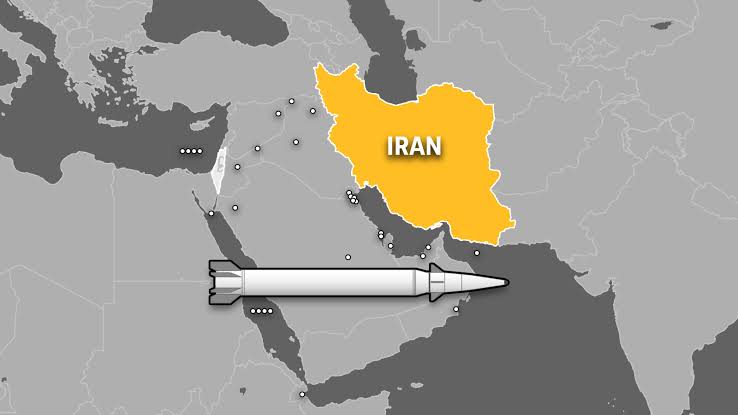
The primary audiences of Ayatollah Seyyed Mojtaba Khamenei’s directives – that is, those who have closely monitored this message, including the enemies who are today following his message – have grasped and continue to grasp the depth of this message and its effects and consequences on the battlefield and beyond.
Hanif Ghaffari – International Relations Analyst:
Prior to the outbreak of war between Iran and the United States in March 2026, Ayatollah Seyyed Ali Khamenei — the martyred Leader of the Islamic Revolution of Iran — warned the Americans and their regional allies in West Asia that any potential war would be regional in scope.
Now, however, the directives of Ayatollah Seyyed Mojtaba Hosseini Khamenei — the Leader of the Islamic Revolution and Commander-in-Chief of Iran’s Armed Forces — have demonstrated that, in the event of a new threat, Iran’s punitive measures against its enemies would far exceed the damage inflicted during the 40-day war between Iran and the United States, known as Ramadan.
During a meeting with Iran’s military commanders, he removed the temporal and spatial constraints previously imposed on the armed forces. This approach indicates that, should the enemy once again commit a new act of aggression against the Islamic Republic of Iran, Iran will be present as a balancing and equation-shaping actor, both on the battlefield and beyond it.
Perhaps the most important point and directive of the Commander-in-Chief of Iran’s Armed Forces was that the capacity for regional equation-shaping would no longer be confined to the geographical boundaries of the region; rather, it would target American and Israeli regime interests in various parts of the world. This would be accompanied by an update of the target bank, the utilization of modern technologies, and the further operationalization of the strategy of the unity of fronts [— meaning the integration of all members of the Islamic Resistance Axis in Iran, Lebanon, Palestine, and Yemen in confronting the Israeli regime and its allies —]. These interests may be located in geography outside the West Asian region.
In other words, the reach of the armed forces, the security forces, and the Islamic Republic of Iran as a whole — whether in identifying enemy threats or identifying its interests — will not be limited to the region’s geography. This means that the enemy can no longer be certain that Iran’s response will be confined solely to a military base or a limited point.
The focus on the enemy’s “non-material” assets also signals a readiness for cyber and intelligence warfare alongside conventional warfare.
The second point is the linkage of this directive to the role of the people. A military response without geographical limitations does not operate in a vacuum; it is the popular backing that demonstrates to the enemy that the “cost-benefit” calculation of attacking Iran has been fundamentally flawed. Therefore, the directives of the Leader of the Islamic Revolution of Iran should not be considered merely as a defensive factor or a reaction to a possible enemy action, but rather should be evaluated as an equation-shaping factor — one that can determine the coordinates of the battlefield and shape the rules of engagement.
The primary audiences of Ayatollah Seyyed Mojtaba Khamenei’s directives – that is, those who have closely monitored this message, including the enemies who are today following his message – have grasped and continue to grasp the depth of this message and its effects and consequences on the battlefield and beyond.
Source: Khorasan Newspaper. November 1, 2026. Issue No. 21182. Page 2